
The first water treatment plant in Dhaka city was established by Nawab Khwaza Abdul Ghani in Chandnighat beside the river Buriganga named Dhaka waterworks’ in the year 1874, which was also the 1st water treatment plant in South Asia. From then the piped water supply was started in Dhaka city.
Dhaka Water Supply and Sewerage Authority (Dhaka WASA)
Dhaka WASA was established in 14th November, 1963.
Dhaka WASA operates under the Water Supply and Sewage Authority Act, 1996.
The mandate includes the following:
– Ensure safe reliable and adequate drinking water for all residents of Dhaka city.
– Collection, treatment and disposal of sewage in a safe and environment friendly manner in Dhaka city.
– Monitor water quality and enforce health and environmental standards for the inhabitants of Dhaka city.
To ensure safe, adequate and reliable water supply, and effective management of sewage for the inhabitants of Dhaka city.
To be the best water utility in the public sector of Asia-Environment friendly, Sustainable and Pro people Water Management System.
· Constantly seek ways to better serve our customers
· Implement the projects effectively and speedily
· Reduce dependency from GW to SW
· Practice a corporate culture in management & operation
· Ensure a high level of transparency & accountability
. Improve efficiency and reduce the operating cost
The Strategic objectives of Dhaka WASA are:
· Development of water supply management and improvement of water supply network system.
· Organizational capacity development.
· Increase usage of surface water in sustainable water management.
· Development of sewerage management system of city dweller.
· Development of digitalized financial system and billing services.
· Increasing transparency in official activities and ensuring accountability.
. Conducting dynamism to performance and improving service quality.
· Development of finance and assets management.
· Integrity
· Honesty
· Transparency
· Automation and Digitization
· Promise to customers for best water utility services
· Commitment to sustainability
. Teamwork
. Professionalism
. Good-Governance
Dhaka WASA is an autonomous public utility organization under the Ministry of Local Government, Rural Development, and Co-operatives of the Government of Bangladesh.
Dhaka WASA head office is located at:
98 Kazi Nazrul Islam Avenue, Dhaka WASA Bhaban, Karwan Bazar, Dhaka-1215, Bangladesh.
Yes, Dhaka WASA is governed by a Board of Directors comprising government and non-government representatives.
Dhaka WASA is an autonomous public utility responsible for water supply and sewerage services in Dhaka. It operates under the Ministry of Local Government, Rural Development and Co-operatives.
The organization is governed by a Board of Directors, which sets policies, approves budgets, and oversees overall performance. Daily operations are managed by the Managing Director (MD), who acts as the chief executive officer.
Dhaka WASA operates through several major divisions, including:
. Operations & Maintenance
. Finance & Accounts.
. Administration.
. Research, Planning & Development.
Its activities include water treatment, distribution, sewage treatment & sludge management, customer services, and infrastructure development through zonal offices across the city.
Although government-owned, Dhaka WASA functions with administrative and financial autonomy and is funded through service charges, government support, and international development partners.
Dhaka WASA provide its services over a service area of more than 360 square kilometers, service a population of approximately 20 million people of Dhaka city.
The government of Bangladesh is responsible for appointing the chairman and other members of the board. As per the Dhaka WASA Act,1996 the board typically includes-
– One Chairman (Appointed by the government)
– Representative from
. Ministry of local government, rural development and Co-operatives
. Ministry of Finance
. Ministry of Environment, Forest and Climate Change
. Dhaka City Corporation
. RAJUK
. Civil society/NGOs/Experts.
. Consumers (public-representative) are usually present.
The Managing Director (MD) is the administrative head of Dhaka WASA.
WASA Link: 16162, which is open 24/7
Website: www.dwasa.org.bd
Email: info@dwasa.org.bd
Facebook: fb.com/dwasa.bd
X: @DhakaWASA
Dhaka WASA’s main responsibilities :
– To supply safe, clean and adequate water to the residents of Dhaka City.
– Effective management of sewage for the residents of Dhaka City.
Major activities :
– Operations of Water treatment plants
– Expansion of Surface water projects.
– Maintenance of distribution networks.
– Water Quality testing and monitoring.
– Sewerage system management.
– Sludge management generated from Sewage Treatment Plants.
– Customer service.
In 2009, under the leadership of Hon’ble Prime Minister Sheikh Hasina, the whole water supply policy was turned into an environment friendly, sustainable and pro-people water management system. In achieving this change management policy, DWASA set its vision & mission and declared an action plan called “Dhaka WASA Turn-around Program” which was started in 2010.
The achievements, so far, are briefly as follows:
Dhaka WASA is currently capable of producing 2700 million liters of water per day (MLD) against the daily demand of 2600 MLD for more than 20 million people in 360 sq. km. service area. In 2009, for 12.50 million people the water demand was almost 2120 MLD and water production was 1880 MLD.
The revenue income (Serviced Delivery Earnings) of Dhaka WASA has been increased from 300 crore (3 billion) BDT in the Financial Year 2007 – 2008 to 1984.53 crore (more than 19 billion) BDT in the year 2021-2022.
Before 2009 the operating ratio was 0.90 which is reduced to 0.62 in 2023.
Implementation of mega projects both in water supply and sewerage sector.
In 2010, system loss (Non-Revenue Water-NRW) was around 40%. The loss has been reduced to 20% in 2023. But, introducing modern technology in water supply management, called District Metered Area (DMA), the loss (NRW) has been reduced from 40% to 5% in some areas. DMA will be introduced in the whole area to reduce NRW.
Bringing Low Income Community (LIC) under safe & legal water supply network.
Introduction of 100% real time online billing system.
a) Application procedure/s:
b) Cost:
c) Days will be needed for a connection:
a) Question: How to get a sewerage connection?
Answer:
b) Question: Do the citizens pay for sewerage management?
Answer:
c) Question: If yes, how do the citizens pay?
Answer:
d) Question: And how is the cost (for a family/unit/establishment)?
Answer:
a) Question: Which authority is responsible for installation of tube wells and deep tube wells in the city?
Answer:
b) Question: How to get permission for installation of tube wells and deep tube wells?
Answer:
c) Question: How will it cost?
Answer:
d) Question: How many days will be required to get these services?
Answer:
a) Question: Is Dhaka WASA capable of fulfilling the need of the city-dwellers in water supply?
Answer: The present demand for water in the city is 2550 to 2600 million liters per day (MLD) but, DWASA has the capacity of water production of 2650-2700 MLD from the existing available infrastructures and installations.
a)Question: Is Dhaka WASA capable of fulfilling the need of the city-dwellers in safe sewerage management?
Answer:
DWASA created a hotline 16162 in 2012. Various types of complaints are received by the site engineers from their respective areas through this link. The consumers also put complaints in the complaint centers in the zones either physically or through the telephone. In case of the complaint of contaminated water, the engineers visit the houses of the affected areas. They collect the samples from the houses. After testing the samples in DWASA’s laboratory the probable location can be identified by the team based on the concentration levels of contaminations. The engineers’ team dig the road or the house connections and repair or replace the damaged pipes. After that, the water samples are collected from the nearby houses and tested. Before the collection of the samples, the pipelines are disinfected by the chlorination process. There are complaints about reddish water and/pr water with a bad smell. It happens due to the presence of Iron in the supplied water from the Deep Tube Wells. In such cases the engineer’s team opens the valves of washout lines and wash out the red-type water till it comes to watercolor. A lot of complaints are mitigated instantly based on the nature of the complaints. The sewerage complaints were also mitigated by the zonal engineers.
Dhaka city was divided into 10 zones for its maintenance, operation, and distribution services. In short these are known as MODS zones. These MODS zones are responsible for providing water supply and maintenance in its area of jurisdictions as well as the sewerage facilities. There are two field maintenance divisions (FM) that are working in the maintenance of all pumps in the deep tubewells. Considering the present traffic congestion in the city and to improve and reduce the travel time for maintenance of pumps, the activities of these divisions were decentralized to 3 more sub offices. Duties of these sub-offices are to complete the maintenance works, especially repair or complete the breakdown works within 12 – 15 hours to make the pump operational. These offices are kept open for 24 hours for water supply as well as for the maintenance works.
The source of water that is supplied in the city is groundwater and surface water. Around 67% of water comes from underground sources and the rest 33% from surface water. The present number of deep tubewells is 906 through which the groundwater is abstracted and supplied. There are 5 water treatment plants in the city. These are named Chandni Ghat Water Works, Sayedabad Phase 1, Sayedabad phase 2, Padma (Jashaldia) water treatment Plant, and the Savar Bhakurta well field. The water of the river Shitalakhiya, Buriganga, and the Padma are being treated and supplied in the city. The present demand for water in the city is 2550 to 2600 million liters per day (MLD) but, DWASA has the capacity of water production of 2650-2700 MLD from the existing available infrastructures and installations.
All MODS zones are performing the core responsibilities in providing water supply to the areas. The zones are mainly dependent on pumps which are vulnerable to operations due to any mechanical or electrical faults. Once any pumps are under breakdown the area faces a water crisis. The crisis is managed by rationing of the nearest pumps by operating the switch valves till the pumps are made operational and functional. The crisis is also mitigated by regenerating and installing pumps of any old unused deep tube well in the pump’s compounds. Also, the crisis is managed by increasing the production of surrounding pumps by operating the VFDs. Moreover, in DMA areas the rationing system is easy by operating the gate valves in the networks.
General:
• Approved by ECNEC on 10 March, 2020.
• Administrative order was issued by LGD on 07 September 2020.
Project Objectives:
i) To increase access to safely managed sanitation services in select areas of Dhaka
ii) To improve Dhaka WASA’s efficiency in sanitation service delivery
Project Location:
Kalabagan, Mogbazar, Shahbag, Eskaton, Arambag, Paltan, Shahidbag, Motijheel, Rampura, Taltola, Bashaboo, Golapbag, Ahmedbag, Saidabad, Goran, Baganbari, Khilgaon, West Nandipara, Sabujbag, East Nandipara, Natunpara, Rajarbag, Golapbag East etc.
Implementation Period: January, 2020 – December, 2024.
Total Project Cost: 3,855.60 Crore Tk.
• PA: 2,856.00 Cr Tk (IDA-WB 1,428.00 Cr Tk, AIIB-1,428.00 Cr Tk)
• GoB: 999.60 Cr Tk
World Bank Loan/Credit valid till: June, 2025
Major Project Activities and Status:
Service Packages
❖ Consultancy Services for Design Review and Construction Supervision (Package SD1):
– The Contract was effective on May 1, 2023.
❖ Consultancy Services from a Project Management Consultant (Package SD2):
– The Contract is yet to be effective. Advance Payment advice sent to DWASA account.
Works Packages
❖ Reconstruction, Expansion and Operation of Pagla STP (Package WD1):
– The Contract was signed on 16 May, 2023.
❖ Reconstruction of Eastern Trunk Mains (Package WD2):
– Advance Payment is under process.
❖ Reconstruction of Western Trunk Mains (Package WD3):
– Advance Payment is under process.
❖ Reconstruction/New Construction/Rehabilitation of Sewerage Networks for Zone W1 and W2 (Kalabagan, Mogbazar, Shahbag, Eskaton etc.) (Package No.: WD5A):
– Combined evaluation awaiting following the RFP clause 43.
❖ Reconstruction/New Construction/Rehabilitation of Sewerage Networks for Zone W3 and W4 (Arambagh, Paltan, Shahidbag, Motijheel etc.) (Package No.: WD5B):
– Combined evaluation awaiting following the RFP clause 43.
❖ Reconstruction/New Construction/Rehabilitation of Sewerage Networks for Zone E1A & E1B (Rampura, Taltola, Bashaboo, Golapbag, Ahmedbag, Saidabad etc.) (Package No.: WD6A):
– Technical evaluation ongoing.
❖ Reconstruction/New Construction/Rehabilitation of Sewerage Networks for Zone E2 (Goran, Baganbari, Khilgaon, West Nandipara etc.) (Package No.: WD6B):
– Technical evaluation ongoing.
The formal water supply in Dhaka began in 1874, when Nawab Khwaja Abdul Ghani established the first water treatment plant at Chandnighat beside the Buriganga River. It was known as Dhaka Waterworks—the first such plant in South Asia—and marked the beginning of piped water supply in the city.
Dhaka Sanitation Improvement Project (DSIP)
DSIP stands for Dhaka Sanitation Improvement Project.
To ensure sustainable goals and to improve the public health condition in selected areas of Dhaka City.
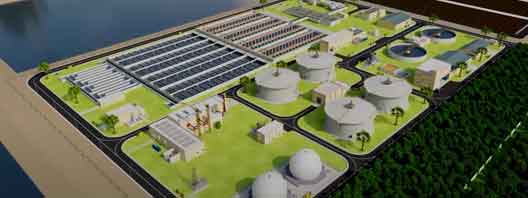
To improve the sanitation services in Pagla catchment area by Reconstruction of Pagla Sewage Treatment Plant (200 MLD) & Reconstruction of the trunk mains & sewer networks of Pagla catchment.
Dhaka South city corporation (95%)
– Paltan, Motijheel, Ramna, Kalabagan, Shahbagh,khilgaon, Sabujbag, kotwali, sutrapur, Bangshal,Wari etc.
Dhaka North City Corporation (5%)
– Noyatola, Modhubag, BTCL colony, Rail Line, Vodro goli etc,.
To address sanitation crisis, reduce environmental pollution, and improve public health of the select areas of Dhaka city.
Around 1.4 million people in selected areas of Dhaka city will be benefited.
– Reconstruction and expansion of Pagla STP (WD1).
– Reconstruction of Eastern Trunk Main (WD2)
– Reconstruction of Western Trunk Main (WD3)
– Reconstruction/ New construction/ Rehabilitation of Sewerage Networks (Kalabagan, Mogbazar, Shahbag) (WD5A)
– Reconstruction/ New construction/ Rehabilitation of Sewerage Networks (Arambagh, Paltan, Shahidbagh, Motijheel) (WD5B)
– Reconstruction/ New construction/ Rehabilitation of Sewerage Networks (Rampura, Taltola,Bashabo, Golapbagh, Ahmedbagh, Saidabad etc) (WD6A)
– Reconstruction/ New construction/ Rehabilitation of Sewerage Networks (Goran, Baganbari, Khilgaon, West Nandipara etc) (WD6B)
– Design and Build (BD) Contract for Reconstruction/New Construction of Sewerage Network in Zone-C (Sabujbag, East Nandipara, Natunpara, Rajarbag, Golapbag East etc) and Reconstruction/New Construction of South-Western Trunk Main (Package No.: WD7)”.
The household owners don’t need to pay extra charges for the sewer connections.
Approximately BDT 5,187.89 crore.
The project is implemented with the direct aid from Government of Bangladesh and financial aid from The World Bank & Asian Infrastructure Investment Bank.
The project started its documentary works in January 2020 and expected to be completed within April, 2028.
There may be temporary disruptions to transportation routes, especially in areas, where large scale sewerage pipe& Trunk Main Pipe- laying, man-hole construction or road excavation are being carried out. Alternative Traffic Route will be planned .
Short-term Impacts like noise, dust, access issues, and business disruption may occur..
Yes, Temporary Resettlement and compensation will be provided for the affected stakeholders.
Through public notices, announcements, signage, leaflets, and community meetings, school campaigns etc.
Via Newspaper Advertisements, Dhaka WASA’s website, DSIP Website, Facebook pages of Dhaka WASA and DSIP, Linked-Inn Profile of DSIP and WASA Link 16162.
DSIP Construction & Community Impact
It will vary depending on the amount of work. Usually 6 to 12 months.
Yes, temporarily to control the air and noise quality sufficient measures will be taken by the respective contractors.
Yes, there will be water sprinkling for dust control and noise barriers for air pollution control.
Yes temporally. Temporary access paths will be provided for the people in affected working areas.
No. The Project will not acquire any private property.
There may be temporary disruptions for some vendors and local shops due to construction works.
Yes, Compensation will be provided to the street vendors following The World Bank and GoB guidelines.
Through a proper Resettlement Action Plan.
Work will be phased, and support will be provided to vulnerable groups following WB and GoB guidelines.
Yes, we shall try to avoid peak traffic times to avoid traffic congestion’s.
Yes. Every household within the designated catchment will be connected to the new Sewer Networks.
Community safety during road excavation, sewerage pipe laying, and heavy construction works will be ensured through proper signage, barriers, and safety boards at all sites. Safety signals, lighting, and traffic control will guide pedestrians and vehicles safely around work zones. Heavy equipment will be operated only by trained personnel under strict supervision. Site supervisors will monitor compliance with safety standards, and the community will be regularly informed about ongoing activities to prevent accidents and ensure public safety.
Yes. The Project might offer temporary construction related jobs for the local people.
The Workers will be selected through local recruitment and standard recruitment procedures.
Through leaflets, brochures, announcements, local leaders, advertisements in Newspapers, campaigns in educational institutions and digital platforms.
Through WASA LINK (16162), and different Dhaka WASA Zonal offices and Grievance Redress Committee.
Dhaka WASA will manage and maintain the entire completed project.
Regular maintenance will be done time to time based on the Plant’s requirements.